
Navigating the Supply Chain: The Reality of OEM Delays and Quality Standards
In the high-speed world of tobacco manufacturing, downtime is the enemy of profitability. Plant managers and maintenance directors often find themselves in a precarious position when critical Hauni Protos spare parts are required but unavailable due to extended lead times from original equipment manufacturers. The traditional model of relying solely on OEM channels has shifted, with many facilities facing delays that stretch from weeks to months. This bottleneck not only halts production lines but also creates significant pressure on maintenance teams to find immediate solutions that do not jeopardize the integrity of the machinery. Understanding the root causes of these delays, including raw material shortages and geopolitical supply chain disruptions, is the first step toward developing a more resilient procurement strategy.
However, the decision to look beyond the OEM is often hindered by concerns regarding quality and compliance. Many plant managers worry that alternative sources may compromise the precision engineering that Hauni machines are known for. The reality, however, is that the market for third-party components has matured significantly. Today, reputable suppliers offer Hauni Protos replacement parts that meet or exceed original specifications. The key lies in vetting suppliers who adhere to strict international standards, ensuring that every component, from electronic sensors to mechanical cutters, performs identically to the factory-fresh original. This shift allows facilities to maintain operational continuity without sacrificing the reliability that defines their brand reputation.
Furthermore, the financial implications of waiting for OEM parts cannot be overstated. Every hour a Protos line is idle represents a direct loss in output and potential revenue. By diversifying their supply chain to include qualified third-party providers, companies can reduce their overall cost of ownership. This does not mean accepting lower quality; rather, it means accessing a competitive market where efficiency drives pricing. When evaluating potential partners, it is crucial to look for certifications and testing protocols that demonstrate a commitment to quality. This approach ensures that the transition to alternative sourcing is not just a cost-saving measure, but a strategic enhancement of operational resilience.
The Challenge of Original Equipment Manufacturer (OEM) Delays
Original equipment manufacturers often prioritize large-scale contracts and long-term service agreements, which can leave individual plant maintenance requests at the back of the queue. For urgent repairs, this prioritization results in unacceptable wait times. Additionally, the complexity of modern tobacco machinery means that some components are produced in limited batches, leading to sudden stockouts. When a Hauni machine components failure occurs, the lack of immediate availability forces plants to operate at reduced capacity or shut down entirely. This vulnerability highlights the need for a secondary supply chain that can respond rapidly to unexpected failures. By anticipating these delays, maintenance planners can stock critical items or establish relationships with agile suppliers who specialize in rapid turnaround for urgent needs.
Cost Efficiency Without Compromising Quality
One of the primary drivers for seeking alternative sources is the significant cost differential between OEM and third-party options. However, cost efficiency should never come at the expense of performance. High-quality third-party suppliers invest heavily in material science and precision manufacturing to ensure their parts match the durability and tolerance of the originals. For instance, ISO certified tobacco machine parts from reputable vendors undergo rigorous testing to ensure they can withstand the high speeds and stresses of continuous operation. This balance of affordability and reliability allows companies to optimize their maintenance budgets while keeping production lines running smoothly. The goal is to achieve a total cost of ownership reduction that includes not just the purchase price, but also the minimized cost of downtime and extended equipment life.
Critical Component Analysis: Precision Engineering in Action
When sourcing alternative components, it is essential to understand the specific engineering requirements of each part. The third-party Hauni parts market has evolved to offer specialized solutions for the most critical and failure-prone components of the Protos series. Two of the most vital elements are the microwave scanners and the cutting knives. These components directly impact the quality of the final product and the efficiency of the machine. Microwave scanners are responsible for measuring the density and moisture content of the tobacco strand in real-time, while cutting knives determine the physical integrity of the cigarette. Any deviation in these parts can lead to significant quality defects, such as uneven burning or broken tips, which are costly to rectify. Therefore, selecting parts that replicate the exact material properties and geometric tolerances of the original is non-negotiable.
The performance of a microwave scanner relies heavily on signal stability and accuracy. In a Hauni Protos spare parts replacement scenario, the new unit must be calibrated to emit and receive signals with the same precision as the original. This ensures that the feedback loop controlling the tobacco feed remains accurate, preventing waste and ensuring consistent product weight. Similarly, cutting knives must meet specific hardness standards to maintain a sharp edge over thousands of cuts. If the hardness is too low, the knife will dull quickly, leading to poor cut quality and frequent changes. If it is too high, the knife may become brittle and chip. Understanding these technical nuances allows maintenance teams to make informed decisions when evaluating potential replacements, ensuring that the new parts integrate seamlessly into the existing system.
Microwave Scanner: Ensuring Signal Stability and Accuracy
The microwave scanner is the "eye" of the Protos machine, constantly monitoring the tobacco strand for density variations. When replacing this component, signal stability is paramount. Third-party suppliers must use high-quality electronic components and shielding to prevent interference from the machine's motor and other electrical systems. A scanner that suffers from signal noise will provide inaccurate data to the control system, leading to incorrect adjustments in the tobacco feed. This can result in cigarettes that are too heavy or too light, violating quality standards. Therefore, when sourcing Hauni Protos replacement parts, it is crucial to verify that the supplier provides scanners that have been tested for electromagnetic compatibility and signal integrity. This ensures that the replacement unit will perform reliably in the harsh industrial environment of a tobacco factory.
Cutting Knives: Hardness Standards and Durability
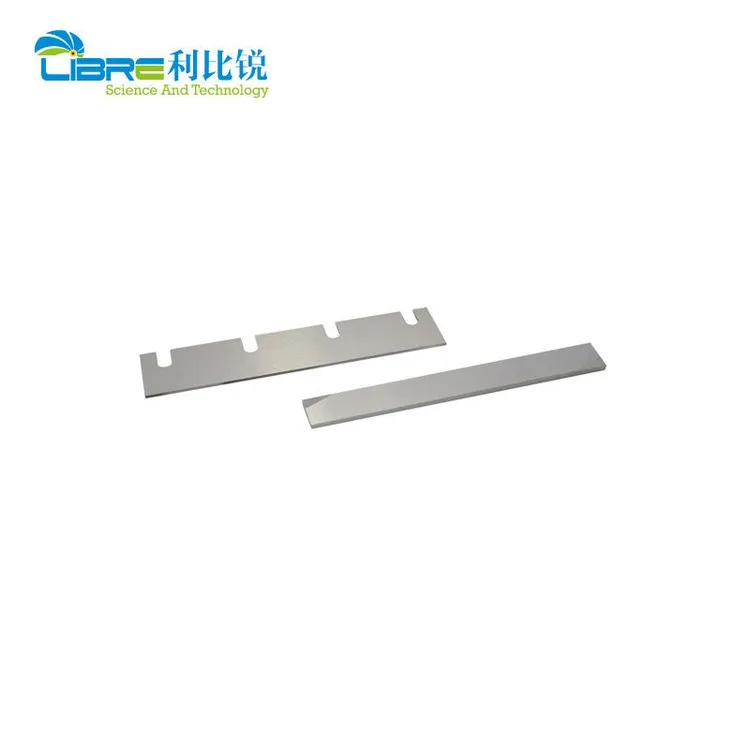
Cutting knives are subjected to extreme mechanical stress, requiring a precise balance of hardness and toughness. The material used for these knives must be able to maintain a sharp edge without fracturing. In the context of Hauni machine components, the hardness is typically measured on the Rockwell C scale, and deviations can lead to premature wear or catastrophic failure. Third-party manufacturers must use high-grade steel alloys and heat treatment processes that replicate the original specifications. This ensures that the knives last for the expected number of operating hours before needing replacement. By focusing on these material properties, suppliers can offer knives that not only fit the machine but also deliver the durability required for high-speed production. This attention to detail is what separates high-quality third-party parts from inferior imitations.
Ensuring Compatibility and Reliability Across Protos Models
Compatibility is a major concern when dealing with different models of the same machine family. The Protos 70, 80, and 90 series share many commonalities, but they also have distinct differences in their mechanical and electronic configurations. When sourcing third-party Hauni parts, it is essential to verify that the components are specifically designed for the model in question. A part that fits a Protos 70 may not align correctly with a Protos 90, leading to installation issues or operational failures. Reputable suppliers maintain detailed part numbers and cross-references to ensure that customers receive the correct component for their specific machine configuration. This level of detail is crucial for maintaining the precision and efficiency of the production line, as even minor misalignments can cause significant wear and tear on other components.
Beyond physical fit, electronic compatibility is equally important. Modern Protos machines rely on sophisticated control systems that communicate with various sensors and actuators. When replacing electronic components, such as sensors or control boards, it is vital that the new part is compatible with the machine's software version and communication protocols. Third-party suppliers must ensure that their electronic Hauni Protos spare parts are programmed and tested to work seamlessly with the existing control architecture. This prevents communication errors and ensures that the machine can operate at its full speed and capacity. By focusing on model-specific compatibility, suppliers help plant managers avoid costly installation errors and ensure a smooth transition from old to new components.
How We Ensure Fit for Protos 70, 80, and 90 Models
To guarantee a perfect fit for Protos 70, 80, and 90 models, suppliers employ a rigorous verification process that includes digital modeling and physical prototyping. Before mass production, components are tested against 3D scans of the original parts to ensure dimensional accuracy. This process helps identify any potential interference issues that could arise during installation. Additionally, suppliers maintain a comprehensive database of part numbers and specifications for each model, allowing customers to easily identify the correct replacement. This attention to detail ensures that the Hauni Protos replacement parts delivered are not just generic substitutes, but precise replicas that integrate seamlessly into the machine. By prioritizing model-specific design, suppliers help minimize downtime and ensure that the machine operates as intended.
Testing Protocols: From Bench to Production Line
Quality assurance is the backbone of any reliable third-party supplier. Before any Hauni machine components leave the factory, they must undergo a series of rigorous tests to ensure they meet performance standards. These tests include dimensional checks, material hardness testing, and functional testing under simulated operating conditions. For electronic components, this may involve stress testing to ensure stability under varying voltage and temperature conditions. For mechanical parts, it may involve fatigue testing to assess durability over time. By implementing these comprehensive testing protocols, suppliers can guarantee that their parts will perform reliably in the demanding environment of a tobacco factory. This commitment to quality helps build trust with plant managers and ensures that the replacement parts deliver the same level of performance as the originals.
Implementation Strategy: Best Practices for Replacement
Implementing third-party replacement parts requires a structured approach to ensure success. The first step is to develop a clear procedure for identifying and sourcing the correct parts. This involves maintaining an updated inventory of critical spares and establishing relationships with multiple qualified suppliers to mitigate the risk of supply chain disruptions. When a failure occurs, maintenance teams should follow a standardized replacement procedure to ensure that the new part is installed correctly. This includes verifying the part number, inspecting the component for damage, and following the manufacturer's installation guidelines. By following these best practices, plant managers can minimize the risk of installation errors and ensure that the new parts perform as expected. This structured approach also helps in tracking the performance of third-party parts over time, allowing for continuous improvement in the sourcing strategy.
Avoiding common pitfalls is just as important as following best practices. One common mistake is assuming that all third-party parts are of equal quality. It is essential to vet suppliers carefully, looking for certifications, customer reviews, and technical support capabilities. Another pitfall is neglecting to update maintenance records to reflect the use of third-party parts. This can complicate warranty claims and make it difficult to track the performance of specific components. By maintaining accurate records and communicating openly with suppliers, plant managers can ensure that their maintenance strategy remains effective and efficient. This proactive approach helps to maximize the benefits of third-party sourcing while minimizing potential risks.
Step-by-Step Replacement Procedures
A successful replacement begins with thorough preparation. Before removing the old part, ensure that the machine is locked out and tagged out to prevent accidental startup. Next, carefully document the position and orientation of the old part to aid in the installation of the new one. When installing the new Hauni Protos spare parts, use the correct tools and torque specifications to avoid damaging the component or the machine. After installation, perform a functional test before returning the machine to full production. This step-by-step approach ensures that the replacement is done correctly and safely, minimizing the risk of further damage or injury. By following these procedures, maintenance teams can ensure that the new parts integrate seamlessly into the machine and perform reliably.
Common Pitfalls and How to Avoid Them
One of the most common pitfalls in replacing Hauni Protos replacement parts is overlooking the importance of proper storage. Components should be stored in a clean, dry environment to prevent corrosion or damage before installation. Another pitfall is failing to inspect the surrounding components for wear or damage. If a part fails due to an underlying issue, replacing it without addressing the root cause will lead to premature failure of the new part. By conducting a thorough inspection and addressing any underlying issues, plant managers can ensure that the new parts last as long as expected. This holistic approach to maintenance helps to reduce downtime and improve the overall reliability of the production line.
Conclusion
Transitioning to third-party sourcing for Hauni Protos maintenance does not have to be a risky endeavor. By focusing on quality, compatibility, and proper implementation, plant managers can achieve significant cost savings while maintaining high operational standards. The key is to partner with suppliers who prioritize precision engineering and rigorous testing. As the industry continues to evolve, having a flexible and reliable supply chain will be essential for staying competitive. Explore our range of high-quality, ISO-certified components designed to keep your Protos lines running at peak performance.